

Where to give birth in Buenos Aires: private clinics and public hospitals
How to choose: neonatal ICU, the doctor and their team, what the contract must cover, C-section and epidural, your birth partner, the clinic tour and public hospital rules in 2026.
In short
Most families from Russia and the CIS give birth in Buenos Aires at private clinics under a contract: budget US$3,000–6,000 for an uncomplicated vaginal birth including the doctor’s fee; a C-section costs more. The key criterion is not the room or the price but an in-house neonatal intensive care unit and an obstetrician and anaesthetist on duty around the clock. You choose the doctor first, then the clinic where they work. Sanatorio Finochietto closed its maternity ward in 2026 and is no longer an option for birth. Public hospitals handle emergency births, but scheduled care for foreigners without residence became chargeable in 2025–2026.
Selection criteria: what matters most
- A neonatal ICU (terapia intensiva neonatal) in the same building. If your baby needs help, a transfer to another hospital means lost time and a separate bill.
- A 24-hour obstetric emergency unit (guardia obstétrica) with an obstetrician and anaesthetist on site, not “on call”.
- An adult ICU and a blood bank — in case the mother has complications.
- A Registro Civil office inside the clinic — it saves a separate visit; clinics without one (for example, Hospital Británico) register births by online appointment.
- Travel time: 10–20 minutes by taxi from your home, including at night.
- Language: does the doctor speak English, and may your interpreter be present?
Doctor or clinic: who comes first
In Argentina your obstetrician (obstetra) follows the pregnancy and usually delivers the baby with their own team: a midwife (obstétrica), sometimes their own anaesthetist and neonatologist. A doctor works at one or two clinics, so choosing the doctor effectively chooses the clinic.
- The doctor’s and team’s fee is often paid separately from the clinic’s bill (the “módulo” for the birth and the room).
- Who delivers if your doctor is unavailable — on holiday or at another birth: ask about cover in advance, otherwise the clinic’s on-duty doctor will deliver.
- How many appointments before the birth are included in the fee, and in which language you will communicate.
Private maternity hospitals: full list with contacts
Every private hospital in Buenos Aires and the nearby suburbs that currently delivers babies. We checked each one against the hospital’s official pages on 28 October 2026. Before signing a contract, ask your obstetrician which of them they deliver at.
Swiss Medical network
- Clínica y Maternidad Suizo Argentina — Av. Pueyrredón 1461, Recoleta; tel. +54 11 5239-6000; Birth plan line: +54 11 5239-6047. Swiss Medical's main maternity: obstetrics and neonatology. 4,421 births in 2022, 207 of them to women from Russia.
- Sanatorio de los Arcos — Av. Juan B. Justo 909, Palermo; tel. +54 11 4778-4500; Birth plan line: +54 11 4778-4570. Swiss Medical's second maternity: 3 delivery rooms, 3 operating rooms, neonatal ICU, private rooms; a 'Hospital Amigo de la Lactancia'.
Galeno network in the city
- Sanatorio de la Trinidad Palermo — Av. Cerviño 4720, Palermo; tel. +54 11 4127-5500; Galeno WhatsApp (appointments): +54 9 11 2337-5555. Galeno's maternity: 4 labour rooms, 2 delivery rooms, 3 C-section theatres, high-complexity neonatology, Registro Civil on site. Births from Trinidad Mitre moved here.
Independent and Omint clinics
- Sanatorio Otamendi — Azcuénaga 870, Recoleta; tel. +54 11 4965-2900; WhatsApp: +54 9 11 2838-2351. Obstetrics and neonatology centre with its own neonatal ICU; Otamendi Sin Fronteras programme for foreign patients.
- Sanatorio Mater Dei — San Martín de Tours 2952, Palermo; tel. +54 11 4809-5555. 15-bed neonatal ICU, about 170 births a month; maternity renovated in 2025. Maternidad Global programme for foreign patients.
- Clínica Bazterrica — Billinghurst 2072, Recoleta; tel. +54 11 4821-1600; WhatsApp (appointments): +54 9 11 4493-2017. Omint group clinic: 24-hour obstetric guardia, high-complexity neonatology, 'Primer Latido' care pack.
- Clínica Santa Isabel — Av. Directorio 2037, Flores; tel. +54 11 4670-8000; WhatsApp (appointments): +54 9 11 4493-2017. Omint group clinic and maternity in Flores.
- Sanatorio Güemes — Av. Córdoba 3933 / F. Acuña de Figueroa 1240, Almagro; tel. +54 11 4959-8200. Obstetricians, midwives and an anaesthetist on duty 24/7; 36-bed neonatology unit.
- Sanatorio Anchorena Recoleta — Dr. Tomás de Anchorena 1872, Recoleta; tel. +54 11 4808-5400. 2 delivery rooms, 2 operating rooms, high-complexity neonatology (18 incubators), Registro Civil on site. No advance booking: admission via the guardia.
Community and university hospitals
- Hospital Alemán — Av. Pueyrredón 1640, Recoleta; tel. +54 11 4827-7000. Non-profit hospital with a maternity unit and neonatal ICU; international patients office.
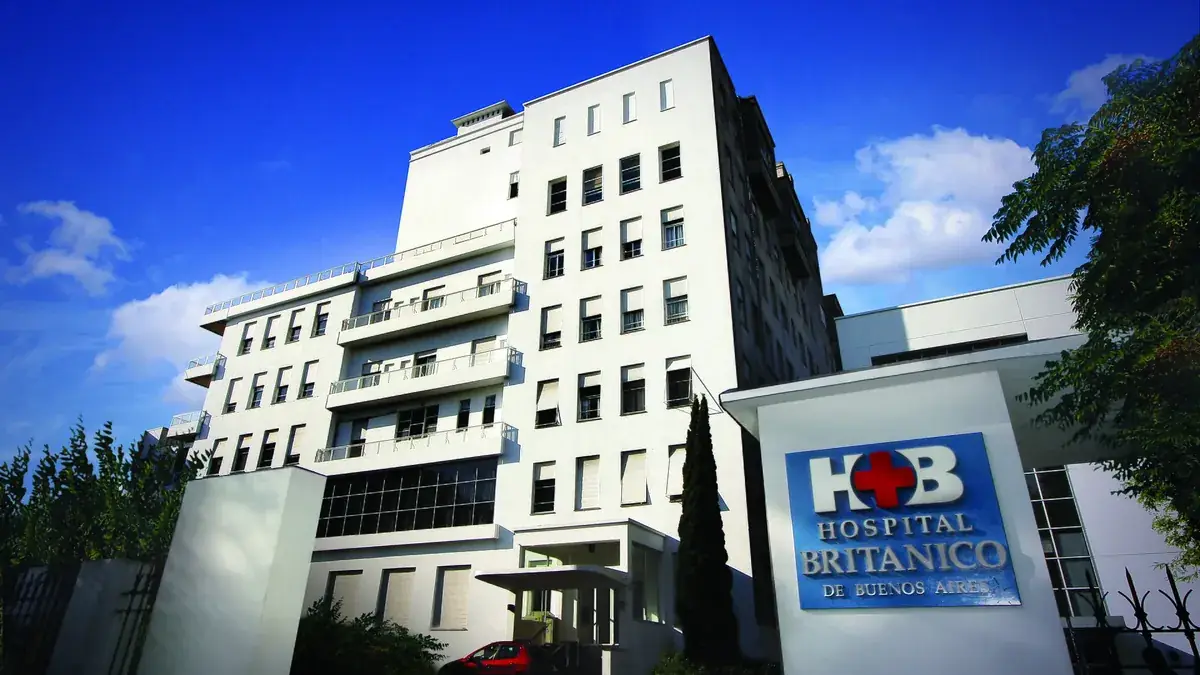
- Hospital Británico de Buenos Aires — Perdriel 74, Barracas; tel. +54 11 4309-6400; International patients (WhatsApp): +54 9 11 3015-9749. Non-profit hospital with an obstetrics and neonatology department; Privilege HB programme for international patients.
- Hospital Italiano de Buenos Aires — Tte. Gral. Juan D. Perón 4190, Almagro; tel. +54 11 4959-0200; International patients (WhatsApp): +54 9 11 6853-5481. University hospital; its neonatology is a national referral centre. Registro Civil on site, international patients office.
- CEMIC — Hospital Universitario Saavedra — Av. Galván 4102, Saavedra; tel. +54 11 5299-0000. University hospital with an obstetric guardia; births only at the Saavedra site.
- Fundación Hospitalaria — Hospital Materno Infantil — Crámer 4601, Saavedra; tel. +54 11 7078-0873. Foundation mother-and-child hospital: delivery rooms, operating rooms, neonatology. Guardia at Crámer 4651.
Suburbs (Greater Buenos Aires)
- Hospital Universitario Austral — Av. Juan Domingo Perón 1500, Pilar; tel. +54 230 448-2000; WhatsApp: +54 9 11 2680-1720. Pilar, about 50 km from the centre. About 200 births a month, neonatal ICU, international patient service.
- Sanatorio de la Trinidad San Isidro (Thames) — Av. Fondo de la Legua 851, San Isidro; tel. +54 11 4898-6700. Galeno's maternity in the northern suburbs: obstetric centre, high-, mid- and low-complexity neonatology.
- Sanatorio de la Trinidad Ramos Mejía — Av. Rivadavia 13280, Ramos Mejía; tel. +54 11 4608-5555. Galeno hospital in the western suburbs: neonatology and neonatal ICU.
- Sanatorio de la Trinidad Quilmes — Carlos Pellegrini 499, Quilmes; tel. +54 11 4365-0500. Galeno's maternity in the southern suburbs: 55 suites, 4 operating rooms, neonatology up to high complexity.
Swiss Medical delivers babies at only two hospitals: Suizo Argentina and Sanatorio de los Arcos. Clínica Olivos, Sanatorio Nordelta, Sanatorio Las Lomas, Clínica Zabala and Sanatorio Agote have no maternity unit (per the network’s official pages as of 28.10.2026).
Maternity closed: Sanatorio Finochietto (May 2026), Sanatorio de la Trinidad Mitre (births moved to Trinidad Palermo), Instituto Médico de Obstetricia — IMO (2025) and IADT (2022). We no longer consider them for births. All contacts are also in the directory and in the Nace Argentina app.
Public hospitals
Buenos Aires City maternity hospitals: Maternidad Sardá (the main city maternity) and the Fernández, Rivadavia, Durand, Argerich, Álvarez, Piñero, Penna, Santojanni and Pirovano hospitals.
- Emergency care is provided to everyone, regardless of status — including labour that has started.
- Buenos Aires City has billed foreigners without an Argentine DNI for scheduled care since March 2025; it recovers the money from insurance or, without it, offers payment options or referral to the consulate.
- National hospitals (Posadas and others), under Resolution 1066/2026, have required foreigners without permanent residence to show insurance or prepay 100% for scheduled care since August 12, 2026. Obstetric emergencies, including imminent birth and eclampsia, count as emergencies — treated without papers or prepayment, but costs after stabilisation may be billed at discharge.
- Downsides for foreigners: queues, shared wards, Spanish only, no choice of doctor.
A public hospital is a fallback, not a plan. How this fits with insurance — see “Health insurance during pregnancy”.
What to check in the contract
- what is included: prenatal care, the birth, anaesthesia, a paediatrician at birth, number of nights (typically about two after a vaginal birth and about three after a C-section — confirm);
- neonatal care: are the first day or days included, and what does each additional day cost — this is usually outside the base price;
- what happens with a premature birth (before 37 weeks) or maternal complications — does the contract price still apply;
- the C-section price and when a planned vaginal birth becomes a C-section;
- separate fees for the doctor, midwife and anaesthetist;
- a private room and whether your partner can stay overnight;
- currency, payment method, deposit dates and how long the quote is valid — important with peso inflation;
- who interprets during the birth, and whether a doula is allowed.
How these amounts add up to a total budget — see “How much does it cost to give birth in 2026”.
C-section and epidural
C-section. Private clinics in Argentina perform many, both for medical reasons and by arrangement with the doctor. If you want a vaginal birth, raise it at your first appointment and ask the doctor about their C-section rate. After a previous C-section, ask whether the doctor will support a vaginal birth and at which clinic. A planned C-section costs more and needs the date agreed earlier.
Epidural. Large private clinics usually offer it around the clock, but the anaesthetist’s fee is often a separate line. Ask whether an anaesthetist is on site all night, whether the epidural is in the contract, and what happens if you prefer to go without.
Your birth partner and the clinic tour
Under Law 25,929 on respectful birth, a woman may choose a person to be with her during labour, birth and afterwards — her partner, mother or a friend. The clinic may not charge for their stay in the room. Policies for C-sections vary: ask in advance whether your partner can enter the operating room. If you want both your partner and a doula, ask whether the clinic allows two companions. On support if you are flying alone, see “Mom-to-be, you are not alone”.
Many clinics run maternity ward tours and antenatal classes. Questions to ask on the tour:
- which entrance to use at night and how fast the guardia will see you;
- how many delivery and private rooms there are, and how often they run out;
- where the neonatal ICU is and whether the mother can stay close to the baby;
- whether there is a Registro Civil office and what its hours are.
Common mistakes
- choosing a clinic by photos of the rooms rather than by its neonatal ICU;
- not asking who delivers if your doctor is unavailable;
- signing a contract with no line on neonatal care or premature birth;
- leaving the contract to week 37: sign by week 34–35;
- counting on a free birth in a public hospital as the main plan.
What to do when — see our guides “How to prepare for birth” and “Step by step from arrival to the parents’ DNI”.
What else to prepare: documents before you fly (apostille checklist), renting near the clinic — rent, expensas and the 10% agency fee, the baby’s citizenship and the parents’ residency after the birth, step by step. Coming from Kazakhstan, Belarus, Armenia, Uzbekistan, Georgia or Israel? Entry rules and documents are in “Birth by nationality”.
How we help
We get current prices from clinics for your due date, compare contracts on neonatal care and fees, and go with you to consultations and the clinic tour — all part of the Premium package.
Frequently asked questions
How much does it cost to give birth at a private clinic in Buenos Aires?
Budget US$3,000–6,000 for an uncomplicated vaginal birth including the doctor's fee; a C-section costs more. Neonatal care beyond the first day or days is usually outside the base contract price, so check it as a separate line.
What is the most important criterion when choosing a birth clinic in Buenos Aires?
An in-house neonatal intensive care unit and an obstetrician and anaesthetist on duty around the clock, not the room or the price. You choose the doctor first, then the clinic where they work, since a doctor works at one or two clinics.
Can a foreigner without residence give birth for free at a public hospital in Buenos Aires?
Emergency care, including labour that has started, is provided to everyone. But the City has billed foreigners without a DNI for scheduled care since March 2025, and national hospitals have required insurance or 100% prepayment since August 12, 2026, so a public hospital is a fallback, not a plan.
Can I still give birth at Sanatorio Finochietto in Buenos Aires?
No. In May 2026 Sanatorio Finochietto announced it was closing obstetrics and neonatology because of falling birth rates, and patients were referred elsewhere. Private clinics foreign families choose most often include Hospital Alemán, Hospital Británico, Sanatorio Otamendi and Suizo Argentina.
Where can you give birth with Swiss Medical in Buenos Aires?
At two of its hospitals: Clínica y Maternidad Suizo Argentina (Av. Pueyrredón 1461, tel. +54 11 5239-6000) and Sanatorio de los Arcos (Av. Juan B. Justo 909, tel. +54 11 4778-4500). Both have neonatology and a phone line for agreeing a birth plan. Clínica Olivos, Nordelta and Las Lomas have no maternity unit.
Sources
- Minuto Uno: Finochietto closes obstetrics and neonatology, May 2026
- La Nación: hospitals chosen by pregnant women from Russia (2023)
- Law 25,929 on respectful birth, plain-language summary
- Buenos Aires City: birth registration and in-clinic offices
- Chequeado: charges for foreigners in City hospitals
- Chequeado: Resolution 1066/2026 on national hospitals
- Derecho en Zapatillas: obstetric emergencies under Resolution 1066/2026
- DNU 366/2025, official text
- Swiss Medical: Sanatorio de los Arcos maternity
- Galeno: Sanatorio de la Trinidad Palermo
- La Nación: maternity units closed as births fall (2025)
- Mater Dei: Maternidad Global programme
- Hospital Universitario Austral
Checked on 28 October 2026. Rules and prices change; confirm current figures before you travel.
The calculator estimates your budget in a minute: clinic, housing, documents, support.
From apostilles to the baby’s passport and parents’ residency — one PDF.
Message us — a coordinator will reply.
Rule changes, explainers and practical guides on giving birth, documents and moving to Argentina.
How we check our content →
Materials provide general navigation and do not replace individual legal, medical or tax advice.
Read next
All articles → RelocationHow to prepare for birth in Buenos Aires: the flight, the fit-to-fly note, your records and first days
A week-by-week plan: when to fly and what airlines require, the fit-to-fly certificate, your pregnancy record and translations, what to pack and your first days.
 DocumentsResidence and DNI for parents of an Argentine child after DNU 366/2025
What residence parents of a child born in Argentina get: duration, documents, RaDEX, precaria, DNI, renewal, permanent residence and what to do if one parent has left.
 DocumentsSNILS for a child born in Argentina and other Russian procedures, including if you stay here
Why the SNILS won't appear by itself, what to prepare, how a relative can get it under a power of attorney if the family stays in Argentina, and what can be done online.