


Powers of attorney before departure and from Argentina: at home, at the consulate or with an escribano
Which powers of attorney to sign before you fly, how to do them at the Russian consulate or before an Argentine notary with an apostille, general vs specific, and what to cover if you stay.
In short
Powers of attorney run in two directions. For matters at home while the family is in Argentina: the bank, property, taxes, and the baby's SNILS and health insurance policy. For matters in Argentina, if one parent arrives later or leaves earlier: the baby's passport, travel authorization, collecting documents. The simplest and cheapest option is to sign what you need at home before you fly. From Argentina, for Russia, the Russian consulate in Buenos Aires is the most convenient: its powers of attorney need no apostille. An Argentine notary (escribano) is the fallback; that route needs an apostille and a translation.
Which power of attorney for which task
| Task | Where it's used | Best place to sign it |
|---|---|---|
| Bank, utility bills, mail | Russia | At your bank before leaving, or a notary |
| Renting out, selling, registering property | Russia | A notary before leaving, or the Russian consulate |
| Tax office, Social Fund, the baby's SNILS and health policy | Russia | A notary or the Russian consulate, after the birth |
| Consent for the baby's passport, authorization to travel with one parent | Argentina | An Argentine escribano, or a notary at home + apostille + sworn translation |
| Collecting finished documents, apostille | Argentina | An Argentine escribano |
What to sign at home before you fly
- Bank. Many banks accept only powers of attorney on their own form signed at a branch, or notarized ones. Ask your bank and do it before leaving. Also check that online banking works with a foreign SIM card and that neither your account nor your card is about to expire.
- Property. Transactions need a notarized power of attorney with the exact address of the property and a list of actions: renting out, receiving money, selling, signing the contract, filing with Rosreestr and MFC offices.
- Tax office and government bodies. A representative of an individual acts before the tax office under a notarized power of attorney. You can handle most matters yourself in the taxpayer's online account, so check your access before leaving.
- Gosuslugi can't be used under a power of attorney. Verify your account before leaving and check that you can log in from abroad.
- For Argentina, if the father arrives later or leaves earlier: notarized consent for the baby's passport and for the baby to travel with the other parent. It is apostilled at home and then translated in Argentina by a sworn translator (see Sworn translation of documents in Argentina).
A useful detail: a notarized power of attorney intended for use abroad with no stated term remains valid until revoked (art. 186 of the Russian Civil Code). For use within Russia with no stated term, it's valid for one year.
A power of attorney at the Russian consulate in Buenos Aires
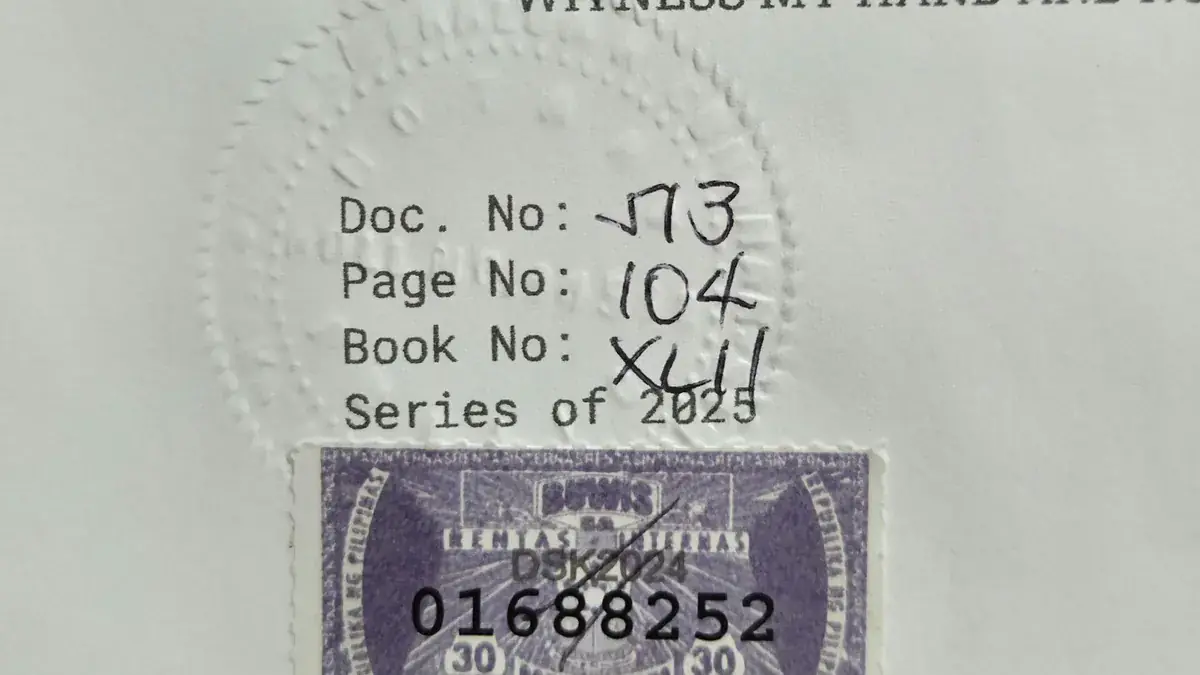
Consular officers perform notarial acts: they certify powers of attorney and consents, and witness signatures and the accuracy of translations. Such a power of attorney has the same force as one from a Russian notary and needs no apostille. There's one limit: a consul doesn't certify the actual contract to sell property in Russia, but does certify a power of attorney to sell it.
- Book through the consulate's electronic queue. Slots can be several weeks out, so book right away.
- You need the grantor's valid Russian passport and the representative's exact details: full name, date of birth, passport, address.
- For a power of attorney covering the baby's affairs, bring the translated birth certificate.
- Prepare the text in advance and agree it with the organization it's going to: the bank, Rosreestr, the Social Fund.
- Consular fees follow the consulate's rates.
A power of attorney before an Argentine notary (escribano)
If the consulate isn't an option, and for matters in Argentina itself, the power of attorney (poder) is made before an escribano.
- The escribano drafts the document. If you don't speak Spanish, a sworn translator attends the signing. A bilingual text is common.
- For use abroad, the notary's signature is legalized by the Colegio de Escribanos. It holds delegated authority from the Foreign Ministry, so the apostille can be issued there or through TAD.
- In Russia, the document is translated into Russian and a notary certifies the translator's signature. Only then do banks and government offices accept it.
This takes longer and costs more than the consular route. But it works for any Hague Convention country, and for Kazakh citizens it's the main route: Kazakhstan has no full embassy in Argentina, only an honorary consulate in Buenos Aires since 2023 (see Giving birth in Argentina for families from Kazakhstan).
General or specific
| General | Specific | |
|---|---|---|
| What it covers | A broad range of acts: managing property, representing you before all authorities | One task or one type of matter: selling a flat, getting a SNILS, running an account |
| Pros | No need for a new one for every task | Banks and registries accept it more readily; less risk of abuse |
| Cons | Organizations often want specifics; high risk if trust breaks down | A new task needs a new document |
In practice, a "broad specific" power of attorney works well: a list of named authorities and actions for each area. Banks and Rosreestr often reject vague wording like "all matters". A notarized power of attorney can be revoked at any time before a notary or at the consulate, and the revocation is recorded in the notaries' shared system.
If you're staying in Argentina
Once the family decides to stay, the power of attorney becomes your "hands" in Russia for years. What to cover:
- The child: the Social Fund and MFC offices (SNILS), health insurers (OMS policy), the tax office (INN), the Social Fund on maternity capital. How this works: A child's SNILS and Russian procedures.
- Banks: on the bank's form or notarized, with the right to get statements, close accounts and reissue cards. Update your passport details at the bank when you renew your international passport.
- Property: management, rental contracts, utility payments, dealing with the building management company; a sale as a separate clause with the address.
- Taxes: representation before the tax office and collecting documents. If you spend more than 183 days a year outside Russia, your tax residency usually changes, and with it the rates on your Russian income. Discuss it with an adviser in advance.
- Term: 3–5 years, stated explicitly. The right of substitution is optional.
Residency and the DNI in Argentina are a separate process that can't be done by proxy: the applicant files in person (see Parents' residency and DNI).
If one parent leaves early
- Consent for the baby's passport and authorization to travel with the other parent are signed before an escribano before leaving. The authorization is legalized by the Colegio de Escribanos.
- If you've already left, the consent can be signed before a notary at home and apostilled. In Argentina it's translated by a sworn translator and legalized by the translators' association: certification costs from ARS 33,000.
- For collecting documents and the apostille, a simple power of attorney before an escribano is enough. A representative can't file the DNI or passport application for you. The order of steps: Your baby's documents after birth.
- If the departing parent is the family's only Russian citizen, plan the child's citizenship first: see Russian citizenship for a child born in Argentina.
Common mistakes
- a "general" power of attorney with no named authorities, which the bank or Social Fund won't accept;
- Latin spellings in the Argentine document that don't match the international passport;
- no stated term, so the power of attorney "runs out" after a year;
- an escribano's power of attorney without an apostille, or without a notarized translation in Russia;
- forgetting to verify Gosuslugi and online banking before you fly.
How we help
In our pre-departure audit we go through your situation and draw up a list of powers of attorney and consents: what to do at home, what at the consulate and what before an escribano. We review the texts before you sign.
Frequently asked questions
Does a power of attorney made at the Russian consulate in Buenos Aires need an apostille?
No. A power of attorney certified by a consul has the same force as one from a Russian notary and needs no apostille. The consul won't certify the actual contract to sell property in Russia but will certify a power of attorney to sell it; book through the electronic queue, as slots can be several weeks out.
Can I make a power of attorney for Russia before an Argentine notary (escribano)?
Yes, as a fallback: the Colegio de Escribanos legalizes the escribano's signature, an apostille is added, and in Russia the document is translated with a notary certifying the translator's signature. It takes longer and costs more than the consular route but works for any Hague Convention country.
How long is a notarized power of attorney valid if no term is stated, when the family leaves to give birth in Argentina?
One intended for use abroad with no stated term remains valid until revoked (art. 186 of the Russian Civil Code); for use within Russia it is valid for one year. If the family stays in Argentina, we suggest a term of 3–5 years, stated explicitly.
Can a representative with a power of attorney file my baby's DNI, passport or my residency in Argentina?
No. A representative can't file the DNI or passport application for you, and the parents' residency and DNI are filed by the applicant in person. A simple power of attorney before an escribano is enough for collecting finished documents and the apostille.
Sources
- Russian Civil Code, art. 186: term of a power of attorney (RU)
- Fundamentals of Legislation on Notaries, art. 38: notarial acts by consuls (RU)
- Argentine Foreign Ministry: apostille, including notarial documents via the Colegio de Escribanos
- Migraciones: travel authorization for minors and rules for foreign documents
- Social Fund of Russia: applying through a representative with a notarized power of attorney (RU)
- Kazakhstan's honorary consulate opens in Buenos Aires (2023) (RU)
Checked on October 14, 2026. Rules and prices change; confirm current figures before you travel.
From apostilles to the baby’s passport and parents’ residency — one PDF.
Message us — a coordinator will reply.
Rule changes, explainers and practical guides on giving birth, documents and moving to Argentina.
How we check our content →
Materials provide general navigation and do not replace individual legal, medical or tax advice.
Read next
All articles → RelocationHow to prepare for birth in Buenos Aires: the flight, the fit-to-fly note, your records and first days
A week-by-week plan: when to fly and what airlines require, the fit-to-fly certificate, your pregnancy record and translations, what to pack and your first days.
 DocumentsYour baby's documents after birth in Argentina: partida, DNI, CUIL, passport and apostille
Birth registration, partida, DNI and CUIL, passport, travel authorization and apostille: the order, timing and 2026 fees, plus what to do if one parent leaves early.
 DocumentsResidence and DNI for parents of an Argentine child after DNU 366/2025
What residence parents of a child born in Argentina get: duration, documents, RaDEX, precaria, DNI, renewal, permanent residence and what to do if one parent has left.